Core Mission:
Help skaters understand their bodies so they can move more efficiently, safely, and confidently on AND off the ice.
Help skaters understand their bodies so they can move more efficiently, safely, and confidently on AND off the ice.
Skaters ask the same questions all the time:
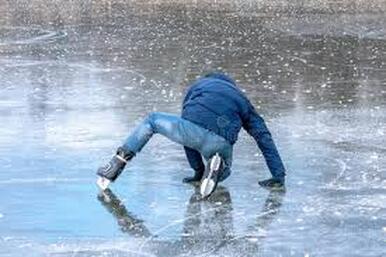
Why do I keep falling?
Why can't I bend my knees?
Why are my crossovers terrible?
Why do hockey stops feel impossible?
Why does everyone else make this look easy?
The answer usually isn't "try harder", it's gaining understanding of how your body moves.
Why do I keep falling?
Why can't I bend my knees?
Why are my crossovers terrible?
Why do hockey stops feel impossible?
Why does everyone else make this look easy?
The answer usually isn't "try harder", it's gaining understanding of how your body moves.
Most adult skaters don't struggle because they aren't working hard enough.
They struggle because nobody taught them how their body affects their skating.
Balance, mobility, stability, posture, confidence, and movement awareness all influence what happens on the ice. Sea of Qi helps skaters understand and improve the physical foundations behind skating so they can move more efficiently, safely, and confidently.
Whether your goal is better crossovers, stronger hockey stops, improved mobility, or simply feeling more comfortable on the ice, the process starts with understanding your body.
⛸️Understand your body.
⛸️Move with intention.
⛸️Skate with confidence.
They struggle because nobody taught them how their body affects their skating.
Balance, mobility, stability, posture, confidence, and movement awareness all influence what happens on the ice. Sea of Qi helps skaters understand and improve the physical foundations behind skating so they can move more efficiently, safely, and confidently.
Whether your goal is better crossovers, stronger hockey stops, improved mobility, or simply feeling more comfortable on the ice, the process starts with understanding your body.
⛸️Understand your body.
⛸️Move with intention.
⛸️Skate with confidence.
What We Work On
- Balance & Body Awareness
- Hip & Ankle Mobility
- Stability & Control
- Confidence & Fear Reduction
- Hockey & Figure Skating Applications
- Injury Prevention & Recovery
Sea of Qi's Off-Ice Movement Coaching helps skaters improve balance, mobility, stability, body awareness, and confidence so they can move more efficiently on the ice.
We focus on the foundations behind skating: weight transfer, hip mobility, ankle mobility, balance, posture, breathing, and movement control.
Whether you play hockey, figure skate, or simply want to feel more comfortable on the ice, these workshops are designed to help you understand your body, build confidence, and create movement that actually transfers to skating. This is why we start on land: get your feet planted solidly before they decide to slip out from under you.
No matter if it's their first time putting on skates or their professional career, anyone that skates can have:
- fear of falling
- fear of backward skating
- poor balance
- poor hip mobility
- tight adductors
- weak glutes
- limited ankle mobility
- inability to get low
- inability to stay low
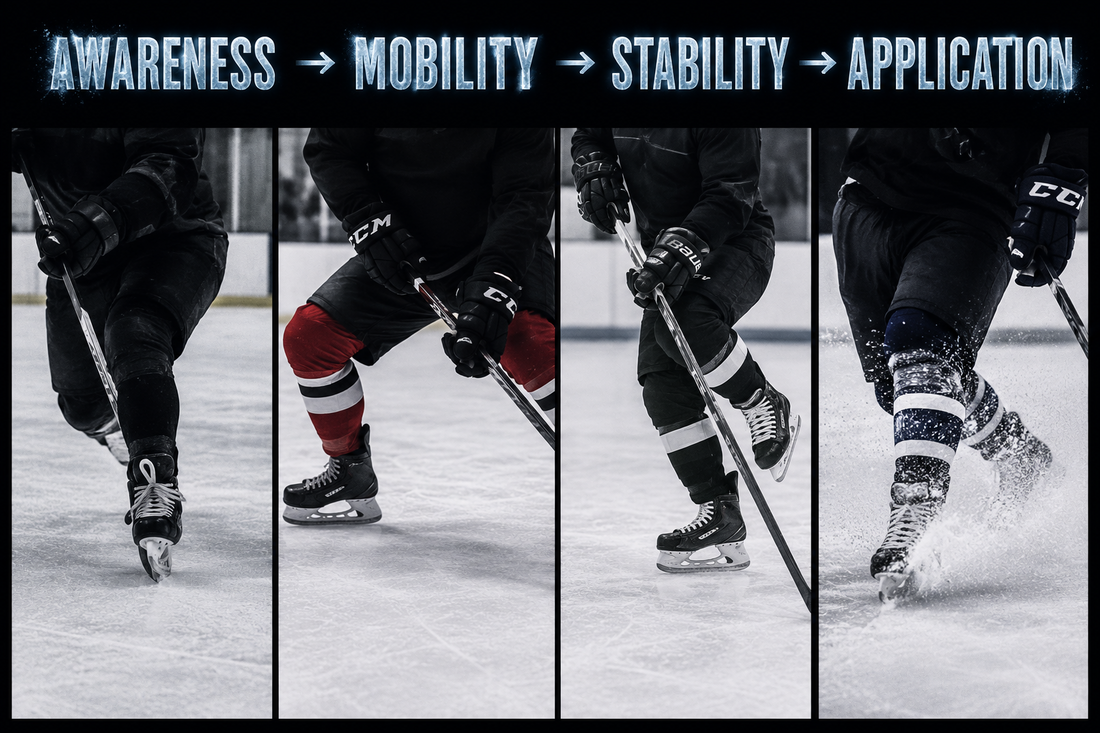
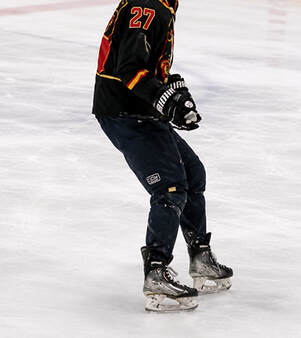
Pillar 1: Awareness
Most skating problems begin before the skate ever touches the ice.
Awareness is learning to recognize where your body is in space. Where is your weight? Which foot are you actually standing on? Can you feel the difference between balance, compensation, and control? Before we can improve movement, we first need to understand what our body is already doing.
Focus Areas: balance, posture, weight transfer, edge awareness, body position
Things to consider:
Pillar 2 - Mobility
Mobility is your ability to access the positions skating requires.
Can your ankles bend enough to get low? Can your hips rotate enough to perform a Mohawk? Can your body move efficiently without forcing the position? Mobility is not about becoming more flexible for the sake of flexibility—it's about creating movement options that make skating easier and more efficient.
Focus Areas: hips, ankles, adductors, thoracic spine, rotational movement
Things to consider:
Pillar 3: Stability
A position is only useful if you can control it.
Once mobility is available, stability teaches your body how to own that range. Can you maintain balance on one leg? Can you stay low without collapsing? Can you move into and out of positions with confidence? Stability builds the strength, control, and confidence that skating demands.
Focus Areas: glutes, balance, single-leg control, posture, movement quality
Things to consider:
Pillar 4: Skating Application
This is where movement becomes skating.
Awareness, mobility, and stability are valuable on their own, but the goal is to transfer those skills to the ice. Hockey players and figure skaters may use movement differently, but both rely on the same physical foundations. Once the body understands the position and can control it, skating becomes more efficient, powerful, and confident.
Hockey Applications: stride mechanics, crossovers, stops, transitions, backward skating, defensive posture
Figure Applications: spirals, extension, rotational control, jump preparation, symmetry, flexibility with strength
Most skating problems begin before the skate ever touches the ice.
Awareness is learning to recognize where your body is in space. Where is your weight? Which foot are you actually standing on? Can you feel the difference between balance, compensation, and control? Before we can improve movement, we first need to understand what our body is already doing.
Focus Areas: balance, posture, weight transfer, edge awareness, body position
Things to consider:
- Which foot are you actually standing on?
- Can you feel your edges?
- Can you identify where movement is coming from?
- Can you tell the difference between mobility and compensation?
- balance drills
- single-leg standing
- weight shifts
- eyes closed drills
- posture awareness
Pillar 2 - Mobility
Mobility is your ability to access the positions skating requires.
Can your ankles bend enough to get low? Can your hips rotate enough to perform a Mohawk? Can your body move efficiently without forcing the position? Mobility is not about becoming more flexible for the sake of flexibility—it's about creating movement options that make skating easier and more efficient.
Focus Areas: hips, ankles, adductors, thoracic spine, rotational movement
Things to consider:
- Do your ankles move?
- Do your hips rotate?
- Can you squat?
- Can you lunge?
- Can you open into a Mohawk position?
- Pigeon pose
- straddle work
- pliés
- adductor mobility
- thoracic rotation
Pillar 3: Stability
A position is only useful if you can control it.
Once mobility is available, stability teaches your body how to own that range. Can you maintain balance on one leg? Can you stay low without collapsing? Can you move into and out of positions with confidence? Stability builds the strength, control, and confidence that skating demands.
Focus Areas: glutes, balance, single-leg control, posture, movement quality
Things to consider:
- Can you control the position?
- Can you stay there?
- Can you move out of it?
- glute med strengthening
- single-leg balance
- bridges
- wall sits
- controlled squats
Pillar 4: Skating Application
This is where movement becomes skating.
Awareness, mobility, and stability are valuable on their own, but the goal is to transfer those skills to the ice. Hockey players and figure skaters may use movement differently, but both rely on the same physical foundations. Once the body understands the position and can control it, skating becomes more efficient, powerful, and confident.
Hockey Applications: stride mechanics, crossovers, stops, transitions, backward skating, defensive posture
Figure Applications: spirals, extension, rotational control, jump preparation, symmetry, flexibility with strength
🌿Workshops - Movements and Focus🌿
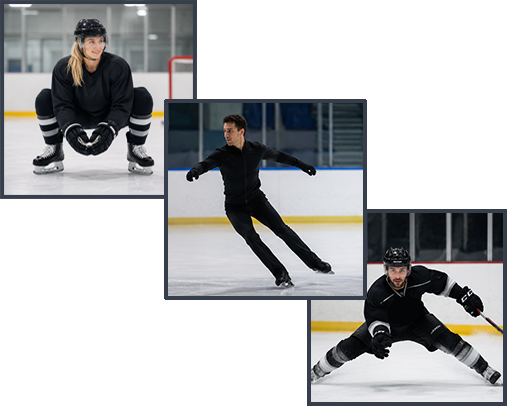
Workshop 1: Why Can't I Get Lower?
You've heard "BEND YOUR KNEES!" a million times, but we promise - we'll check to see how well you're doing on that. Invisible barstool, chair pose, and consideration of current knee problems are all taken into consideration as you're taught different ways to squat from a standing AND seated position. The walls and the boards are your best friend!
This workshop covers:
- ankle mobility
- squat mechanics
- hip mobility
Workshop 2: Crossovers Are Tough
Sometimes simply being able to describe a crossover out loud is the most difficult thing for beginners to do. For those who have concerns, don't worry - you are in no way the only one who "can't" do them yet. Even those with years of experience always want to find different ways to simply improve.
This workshop covers:
- weight transfer
- balance
- hip control
Workshop 3: The Mohawk Problem
Feel free to have whatever haircut you want while you begin to understand the mechanics of how to get those transitions, half mohawks, and half pivots down without twisting your ankle.
This workshop covers:
- hip opening
- adductors
- internal/external rotation
Getting lower to the ground, finding your balance, and understanding the phrase "bend your knees and open your hips!" is paramount to both skating and gaining confidence in your active or athletic movements. Being aware of exactly how your muscles and tendons work can also help you understand how prevent injury during challenging moves - or heal faster after an accident, on or off of the ice.
As you move forward with these lessons, it becomes easier to understand that rotation and breathwork aren't just to get your hockey stops on point. They are invaluable items that get you through each day, and allow you to have more fun in life. Tension sits and takes up all available space in your body, and no one has time for that.
|
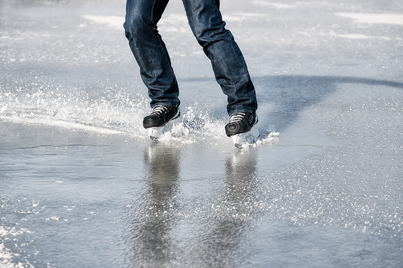
Workshop 4: Why Do Hockey Stops Feel Impossible?
We promise that the boards are there to help you out, but please don't be afraid of wearing kneepads at the very least. Being safe and fully padded up on ice is crucial, but we'll overlook it while you're training on land. (Unless you want to wear a snowsuit for fun.) This workshop covers:
|
Workshop 5: Why Am I So Tense?
We'll go over theories and do work in yoga, Traditional Chinese Medicine, daily structure, lifestyle assessment, and accommodate you at your comfort level. ALL are welcome, including those with disabilities and special needs!
This workshop covers:
We'll go over theories and do work in yoga, Traditional Chinese Medicine, daily structure, lifestyle assessment, and accommodate you at your comfort level. ALL are welcome, including those with disabilities and special needs!
This workshop covers:
- breathing
- posture
- fear responses
- body awareness
❄️Are you ready?❄️
Off-Ice Movement Coaching is for anyone of any age, though our primary clients are adult skaters. We are happy to accommodate all ages, and request that children of age 12 and under must be accompanied by a parent or guardian. All private lessons, trainings, and workshops will be adjusted to the skill level determined on arrival.
Teaching everyone as much as possible not only about skating mechanics but mobility, body awareness, and injury prevention is our main goal after, of course, making sure you're having fun!
Our preference is to teach individuals privately, but can accommodate small groups of up to 4.
Teaching everyone as much as possible not only about skating mechanics but mobility, body awareness, and injury prevention is our main goal after, of course, making sure you're having fun!
Our preference is to teach individuals privately, but can accommodate small groups of up to 4.
Consultation: Free
First lesson: Donation based
Ongoing lessons: $75 per hour (multiple class discounts can be applied).
Parents or Guardians who accompany children age 12 or under may participate at no cost.
SDIA Discounts available:
Free for those on Guardians D5.
Players currently SDIA in-house (roster, sub, or spare) on Division 1 are donation-based. (Proof required.)
First lesson: Donation based
Ongoing lessons: $75 per hour (multiple class discounts can be applied).
Parents or Guardians who accompany children age 12 or under may participate at no cost.
SDIA Discounts available:
Free for those on Guardians D5.
Players currently SDIA in-house (roster, sub, or spare) on Division 1 are donation-based. (Proof required.)
For booking inquiries, please contact:
📞619-512-2589
✉️LarissaDACM@gmail.com